
Edward Sinclair
Throughout the study of crime and its relevant sub-sectors, one thing remains clear. Constant morphological changes in societal norms reflect upon the way ideals are perceived. In the case of victims affected by crime, there is little doubt that such a topic has progressed over the past century. A recent example in an Australian context is the 1985 recognition of rape in marriage to be classified as an indictable offence [Larcombe and Heath, 2012, p 785]. Other forms of government focus appealing to the needs of victims are observed in issues like domestic violence through the use of the Family Violence Protection Act (2008). Nils Christie, a Norwegian sociologist proposed a series of critical traits a victim must hold to be given “complete and legitimate status of being a victim” [Christie 1986, p.18].
Such characteristics of an ideal victim include:
- Weak
- Conducting themselves legally and respectably
- Old or very young
- Attacked by a stranger
- Struggles valiantly
- Attacked in a public space
- The matter is brought to the police immediately
Whilst Christie’s theory suggests a criterion necessary for an individual to fulfil in order to be classified as a victim, possessing only a few ideal victim characteristics indicates victim status qualification. So why is it that some individuals, who adhere to the most fundamental principles of the ideal victim fail to be recognised in contemporary society? Embedded in our society are generalisations that dictate the treatment of specific populace groups despite the only distinction being the social class an individual hails from. Areas of employment have been idealised as contributing to the social class of an individual, with ties to victim status appearing to be increasingly relevant in modern society.

Look at sex workers – a workforce not dissimilar to a typical service job, in which payment is made for a specific service, with only a variety of sexual favours being ‘purchased’. Although a legal practice, sex workers are more liable to be victimised than many other professions. Delving into this unique workforce highlights how sex workers reside within employment that aligns closely with the potential for sexual assault and rape. Yet why do they fail to qualify as ideal victims of crime in the eyes of society? Bruckert and Hannem [2013, pp. 43-63] make the assertion that ties stigmatisation as being a primary basis for the lack of support for sex workers from a victimisation perspective.
In the case of a hypothetical sexual assault of a sex worker resulting in victimisation, several key criteria are still met:
- Conducting themselves legally (sex work act 1994)
- Attacked in a public space (street sex work)
- Attacked by a stranger (client requesting a service)
- Old or young (the range of sex worker age has reported to be 18-60 years old [Donovan 2012, pp. 17-18])
- Struggles valiantly
- May be weak (depending on the individual)
Let’s not forget that sexual assault and rape are far from uncommon in the sex industry. Shannon [2009] extrapolates sexual violence against sex workers in Vancouver, depicting over 57% of the 237 sex worker participants in the study experiencing violence or sexual violence in the past 18 months. Due to being situated on the streets – often exposed – sex workers can be described as highly vulnerable, with some offenders known to the Merseyside Police in the United Kingdom, labelling women in the sex industry as “easy targets” during follow up interviews. [Campbell 2014, pp. 55-71]. When it comes to sex workers, there is no doubt that unfavourable attitudes are bolstered by commercialised influences that obtain significant public attention.

Adapted from: https://www.abc.net.au/news/2017-12-12/sex-worker-attacker-jailed-canberra/9249556
Following the aggravated robbery and rape of a sex worker in Canberra, 24-year-old Rashid Abuuh was imprisoned for almost 4 years [Lowrey, 2017]. The case depicts the vulnerable nature of sex workers going about their business. Conspiring with 2 other perpetrators, Abuuh booked a sex worker, forced her into an isolated bedroom before raping her. Abuuh’s incentive for “free sex and money” [Lowrey 2017] illustrates his primitive notion that certain women are disposable, fortifying a lack of remorse towards those in the sex industry. In justice Michael Elkaim’s words, sex workers operate in “the most vulnerable of occupations”, indicating that no matter the circumstance, the severity is just as high [Lowrey 2017].
“The media doesn’t tell us what to think, they tell us what to think about” (Davies et al., 2007)
Observed via media portrayal and selective reporting of topical issues concerning sex workers, collective opinions on the industry are hardly surprising. Not only does media reporting omit stories associated with the violation of sex workers, but it shifts blame upon the sex worker for offering themselves as “vessels for male sexual consumption” [Bindel 2018]. The reality is that many workers in the sex industry have little options in terms of alternative employment due to harsh socio-economic circumstances, further exemplifying their ability to be victimised. However, this perspective fails to be recognised by society due to the incessant and toxic standards the public are forced to idealise in order to maintain social status. Such an exclusive and stereotypically motivated agenda promoted by media outlets somehow abandons the principles proposed by academics like Christie to maintain public opinion. Stillman’s [2007, p. 491-502] suggestion that the media dictates who is deserving of empathy within society, regardless of what is existentially correct gives vital context to the ostracisation of sex workers in society. To adapt to constant alterations that define ideal victims, we should place a greater focus upon institutions that most often come into contact with victims (like sex workers) – specifically, the criminal justice system (CJS).
Appealing to the needs of sex workers would therefore be in the hands of the government (in conjunction with the Criminal Justice System) in delivering safer legislation. When all is said and done, the involvement of legislation enforced by the CJS is far more critical than public opinion. Giving affected victims access to support services, counselling and the right to be heard during criminal proceedings no matter their orientation, is a concept engrained in the impartiality of procedural justice. However, in Victoria, lobbyists advocating for sex worker rights have been met with harsh resistance via the Victorian Government’s desire to reinforce “no in-call laws” [Cook 2019], meaning that it is illegal for escorts to bring client’s into their own space. This further suppression of the control sex workers have over their workplace, not only highlights the capacity of sex workers to be ideal victims, but also that they are a far more vulnerable populace. Vulnerability extends to the psychological side of victimisation. Portrayed by Cook [2019] one of the interviewed sex workers, Mary, describes being forced to travel to a client’s space “gives men the chance to set up hidden cameras”. Sanders [2004, pp. 557-574] infers the psychological stress associated through prostitution and sex work, alluding to anxiety, depression and post-traumatic stress disorder running concurrently with victimisation propensities.
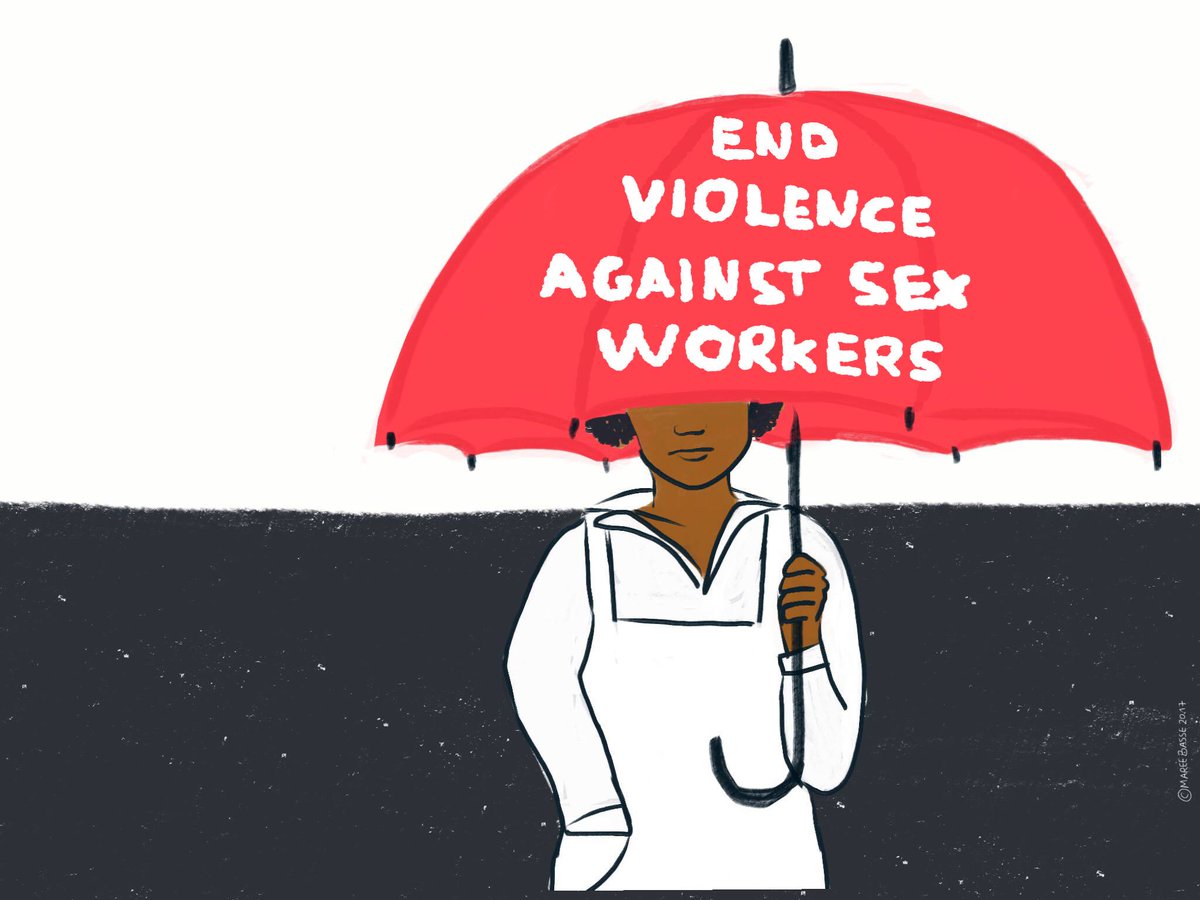
December 17th marks the International Day to End Violence Against Sex Workers. Aiming to abolish negative stigmatisation held against women involved in the sex industry, the day is significant in acknowledging the prevalence of violent crime against sex workers in order to reduce victimisation of sex workers who feel ostracised from their communities.
Adapted from: https://twitter.com/supporthosechi/status/1074748172935806978
The use of the term ‘ideal victim’ is crucial in defining the boundaries to which an individual is classified as such. Albeit Christie’s intent in providing clarification on a complex and evolving rationale, the impact of social platforms and government institutions has subdued the relevance of the concept, resulting in populace groups like sex workers to continue to face societal ostracisation.
References:
Bindel, J. (2018). Prostitution is not a job. The inside of a woman’s body is not a workplace | Julie Bindel. [online] The Guardian. Available at: https://www.theguardian.com/commentisfree/2018/apr/30/new-zealand-sex-work-prostitution-migrants-julie-bindel [Accessed 6 Apr. 2019].
Bruckert, C. and Hannem, S., 2013. Rethinking the prostitution debates: Transcending structural stigma in systemic responses to sex work. Canadian Journal of Law & Society/La Revue Canadienne Droit et Société, 28(1), pp.43-63.
Campbell, R., 2014. Not getting away with it: Linking sex work and hate crime in Merseyside. Responding to hate crime: The case for connecting policy and research, pp.55-71.
Christie, N., 1986. The ideal victim. In From crime policy to victim policy (pp. 17-30). Palgrave Macmillan, London.
Cook, M. (2019). ‘We are not safe’: Escorts call for change in Victorian law. [online] ABC News. Available at: https://www.abc.net.au/news/2019-02-25/victorian-sex-workers-call-for-changes-to-state-laws/10833618 [Accessed 6 Apr. 2019].
Donovan, B. (2012). NSW Sex Industry Report 2012. [ebook] Sydney: UNSW Sydney, pp.p. 17-18. Available at: https://kirby.unsw.edu.au/sites/default/files/kirby/report/SHP_NSW-Sex-Industry-Report-2012.pdf [Accessed 7 Apr. 2019].
FAMILY VIOLENCE PROTECTION ACT 2008. (2008). 1st ed. Victoria: Victorian Government, pp.pp. 1-202. Available at: http://www.legislation.vic.gov.au/Domino/Web_Notes/LDMS/PubStatbook.nsf/f932b66241ecf1b7ca256e92000e23be/083D69EC540CD748CA2574CD0015E27C/$FILE/08-52a.pdf [Accessed 7 Apr. 2019].
Greer, C 2007, ‘News Media, Victims and Crime’, in P Davies, P Francis & C Greer (eds.), Victims, Crime and Society, SAGE Publications, London, pp. 21-25.
Larcombe, W. and Heath, M., 2012. Developing the common law and rewriting the history of rape in marriage in Australia: PGA v The Queen. Sydney L. Rev., 34, p.785.
Lowrey, T. (2017). Jail for rapist who attacked ‘most vulnerable’ worker. [online] ABC News. Available at: https://www.abc.net.au/news/2017-12-12/sex-worker-attacker-jailed-canberra/9249556 [Accessed 7 Apr. 2019].
Sanders, T., 2004. A continuum of risk? The management of health, physical and emotional risks by female sex workers. Sociology of health & illness, 26(5), pp.557-574.
Shannon, K., Kerr, T., Strathdee, S.A., Shoveller, J., Montaner, J.S. and Tyndall, M.W., 2009. Prevalence and structural correlates of gender based violence among a prospective cohort of female sex workers. Bmj, 339, p.b2939.
Stillman, S., 2007. ‘The missing white girl syndrome’: disappeared women and media activism. Gender & Development, 15(3), pp.491-502.
 Crime Daily